Giant Mirrors in Space Could Bring Sunlight After Dark, One Startup Says—and Astronomers Are Concerned

Critics argue the satellites, billed as a way to harness solar energy at night, could hamper sky observations and may pose a threat to human and animal health

:focal(3306x2173:3307x2174)/https://tf-cmsv2-smithsonianmag-media.s3.amazonaws.com/filer_public/30/c5/30c5f898-64ec-4c4b-9013-b6e52f58022c/gettyimages-2230353826.jpg)
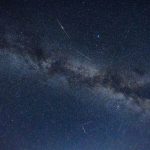
A long-exposure view of the Milky Way, seen from Brandenburg, Germany, is cut through by the light trails of passing satellites.
Patrick Pleul / picture alliance via Getty Images
The sun comes up, and we have daylight; it goes down, and we have night. At least, that’s how it’s been for 4.5 billion years. But now, a California-based startup is aiming to change that pattern.
The company, called Reflect Orbital, intends to launch thousands of satellites sporting reflective panels—giant space mirrors, essentially—into low-Earth orbit, to redirect the sun’s light onto the night side of our planet. The company says this extra sunlight can be used to power solar arrays, assist with search and rescue work, and even fight seasonal depression by extending daylight. Reflect Orbital has applied to the U.S. Federal Communications Commission (FCC) for a license, saying it plans to begin launching these satellites as early as next year.
Did you know? The pace of satellite launches is skyrocketing
Just short of 2,700 satellites were launched to space in 2024, bringing the total number of satellites in Earth orbit to 11,539. At the end of 2020, that number was just 3,371.
Astronomers, however, are concerned about side effects of the project. For starters, they’re worried that these satellites—each of them with the potential to be several times brighter than the full moon, astronomers say—will hamper their view of celestial objects. They also fear possible risks to ecosystems and to human and animal health.
“The nighttime is supposed to be dark, and these satellites are designed to turn night into day,” says James Lowenthal, an astronomer at Smith College. “It goes against every fiber of my existence to imagine that we could intentionally banish the night.”
Samantha Lawler, an astronomer at the University of Regina in Canada, says that anytime a space mirror is above the horizon, “the sky will be too bright to conduct the vast majority of astronomy research.”
The proposed square-shaped mirrors, made of mylar to boost their reflectivity, would range in size from about 33 feet to 180 feet across. A prototype mirror called Earendil-1, planned to be 60 feet in length, could launch as soon as April 2026, according to the company’s FCC application. The startup intends to send dozens more satellites to space over the next two years, with the aim of putting some 4,000 in orbit by 2030. Last year, the team tested the idea with a large mirror carried aloft in a hot-air balloon, which concentrated a sunbeam onto ground-based solar panels.
Project Sunriser

Because the satellites will be in low-Earth orbit, they’ll be moving quickly across the sky, with each illuminating a specific patch of ground for only a few minutes at a time. Providing continuous lighting over an extended period would require multiple satellites working in unison—which the company has said can be achieved.
The beam of light from any particular satellite would be roughly three miles across as it strikes the ground. A spokesperson for Reflect Orbital told Space.com that the beam would cast “a soft, moonlike glow.” However, astronomers believe the effect may be harsher. If one were standing directly in the beam, says Lowenthal, “it would look like daylight; your sky would be bright. You wouldn’t be able to see stars.”
Even if an observer were a few miles off to the side, the effect would be startling, he says. “If you were on a mountaintop looking at a valley, you would see this enormous beam of light illuminating the whole valley.”
Ambitious engineers and entrepreneurs have periodically floated the idea of space mirrors for more than a century. In 1923, German rocket pioneer Hermann Oberth proposed the idea in his PhD thesis—which was rejected by Heidelberg University for being too implausible. Others envisioned similar projects—to act as a weapon or generate more solar energy—but none came to fruition. In 1993, however, a Russian satellite known as Znamya 2, with a mirror about 80 feet across, finally made the idea a reality. Its beam, meant to extend daylight hours in Arctic Siberia, was briefly observed across parts of Europe before the craft was intentionally de-orbited.
Znamya 2, seen from the Russian space station Mir, after deployment on February 4, 1993./https://tf-cmsv2-smithsonianmag-media.s3.amazonaws.com/filer_public/80/45/80455ed3-0b57-457b-8dea-87142ccaf93c/znamya-2.jpg)
Reflect Orbital didn’t respond to a request for comment from Smithsonian magazine. But the company’s CEO, Ben Nowack, has spoken about his ambitions for providing sunlight after dark on many occasions. Addressing the World Governments Summit, an annual technology conference held in the United Arab Emirates, earlier this year, Nowack compared the company’s ambitions to the ancient invention of irrigation. “This is the first time that humanity is gaining control over the sun,” he told his audience. The advancement would be “like when we learned how to control water and move it around so we didn’t have to wait for it to rain. We’re doing that with sunlight.”
Nowack also suggested the mirrors could be controlled so that they would provide sunlight only where it was actually wanted. He said the light would indeed appear very bright if one were standing directly in the beam, “but when you’re outside of the spot, you’ll just see the light on the ground—unless you’re looking directly at the satellite on purpose.” And if a particular area prefers to remain in darkness, he said, it’s a simple matter of changing the orientation of the satellites to direct the reflected light off into space. “So, we can operate a very large constellation of these satellites without bothering people, without blinding folks,” Nowack said.
In an emailed statement to Bloomberg Green, Reflect Orbital acknowledged that “because our system introduces a new scale to redirect natural light, it will continuously raise important questions.” The company added that it’s working with the astronomical community to minimize the potential impact of its project.
But Lowenthal is skeptical. For one thing, every time a satellite is adjusted to direct its light to a new location, he says, the beam would sweep across an unrelated patch of the Earth, “causing flashes everywhere.” He believes it would be next to impossible to obtain the consent of those affected. “I’m thinking about my own town of 30,000 people, a small town—what if there’s one person who says, ‘I don’t want that?’ How’s that going to work?”
Some scientists have doubts that the company’s primary aim of increasing solar power production would actually work. “When you do the calculation, it’s milliwatts,” says Lawler. “You’d need hundreds or thousands of mirrors pointed at the same spot on the ground to even activate a solar panel. It doesn’t make any sense.”
Aaron Boley, an astronomer at the University of British Columbia, says there are far more effective and practical ways to increase the amount of solar power available. “Adding some extra solar panels to roofs seems like a much more tractable solution to providing additional solar power than having giant mirrors from space,” he says.
Scientists are also concerned about the risk of eye damage. Says Lowenthal: “You’re going to be standing there in the dark sky, and suddenly, boom, there’s this flash of sunlight in the sky. And if you happen to be looking through a telescope, it could blind you. If you happen to be an airplane pilot, it could [temporarily] blind you … any type of distraction when a pilot’s on approach could be quite problematic.”
Unwanted light can also be disruptive for animals. Michelle Wooten, an astronomer at the University of Alabama at Birmingham, says that more familiar types of light pollution—from homes, vehicles and industry—are already disruptive for birds. Having light beaming down from space “would have the same disorienting effect that light pollution from city lights [has] on bird migration and result in an increase in bird deaths,” she says. Wooten notes that plants also require both light and darkness to maintain their health.
The timeline for the FCC’s decision—and whether it seems more likely to approve or deny the proposal—is not immediately clear, and the agency did not respond to Smithsonian’s request for comment. But as SpaceNews reported in October, the FCC recently announced a move toward a more streamlined review process, which the agency describes as a “licensing assembly line” that will grant licenses quickly, provided the projects meet certain criteria.
The proposed space mirrors, if launched, would join the tens of thousands of objects already in low-Earth orbit, including the many satellites that crisscross the sky after sunset and before sunrise. These objects are already hampering the work of professional astronomers and amateur stargazers alike. Lowenthal recalls taking a group of students to New Hampshire in 2019, when SpaceX launched its first batch of Starlink internet satellites. “We were out there at night with the telescopes, and one of them said, ‘What is that?’” Lowenthal knew right away they were seeing an array of Starlink satellites march across the sky. “It was a ‘before and after’ moment. The sky will never be the same.”
A SpaceX Falcon 9 rocket carrying 60 Starlink satellites launches from Cape Canaveral, Florida, on June 6, 2020. Paul Hennessy / NurPhoto via Getty Images/https://tf-cmsv2-smithsonianmag-media.s3.amazonaws.com/filer_public/bb/d2/bbd2b811-a1f8-4eab-8ef5-ac082ca2f836/gettyimages-1192349920.jpg)
A line of Starlink satellites moves across the sky, as seen from Ankara, Turkey, on May 7, 2021. Ismail Duru / Anadolu Agency via Getty Images/https://tf-cmsv2-smithsonianmag-media.s3.amazonaws.com/filer_public/22/48/22480460-d4c7-470a-b4ef-fcc2c2c54677/gettyimages-1232748500.jpg)
The space mirror project is just one of many ambitious endeavors that hope to send satellites into low-Earth orbit. Last year, a Russian startup announced it had successfully deployed a prototype “space media satellite” to demonstrate the feasibility of space-based advertising, while a Japanese company wants to create artificial meteor showers.
With low-Earth orbit already dangerously crowded, Lowenthal fears that a falling satellite, or other piece of space debris, will one day cause serious harm. “That may be the next really watershed moment that we have, when a satellite falls on somebody’s house or, God forbid, kills somebody.”
Many scientists point to better regulation as part of the answer. Some are dismayed that control over projects such as the space mirror effort, which might affect the entire planet, sits with only a few individuals. Lawler says: “It’s wild that one little company in California, [with] permission from one agency that looks after radio transmissions, can change the sky for everyone in the world.”
Source link Report Story


Recent Stories
-
Giant Mirrors in Space Could Bring Sunlight After Dark, One...
-

Under $200 for the best budget telescope we recommend!
-

Supermassive dark matter stars may be lurking in the early...
-

Medical Students Are Learning Anatomy From Digital Cadavers. Can Technology...
-

Scientists get 1st good look at a ‘vampire star’ feeding...